
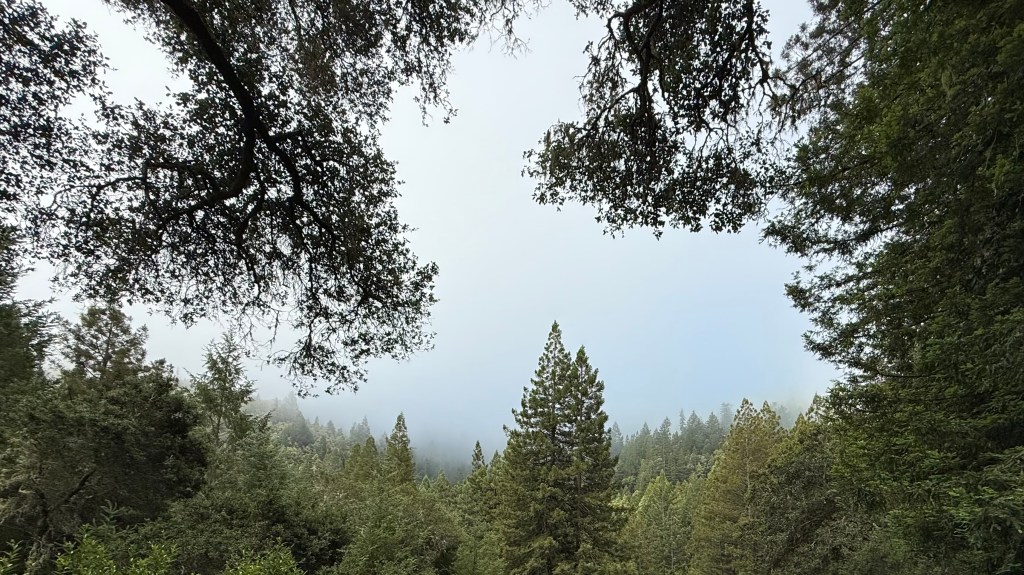
I am beyond fortunate to spend much of my time these days deep in the redwood forests near the coast. This is quite often a nearly silent corner of the world where we are awakened at first light by the sounds of birds and spend our early mornings sitting quietly, contemplating the stillness.
I believe that many of our neighbors here live here for the peace, the sense of being present in the immenseness of the natural world around us. The seasons are marked by sounds: The sound of heavy rains on the roof and on the deck outside our windows, the sound that same rain makes as it seeps through the earth and joins creeks that run just below us, the sound of trees bending in the breeze, the sound of deer quietly passing on the hill above us where they often sleep at night, and the sound of squirrels chasing each other back and forth from branch to branch (and the ensuing sound of falling nuts and cones, which I often think are intentionally aimed at our small dog!).
The noises added to this world by humans stand out as cacophony; we add unnatural noise to our world that masks the true sounds of the planet and its life. The morning stillness here in the forest is broken by the sound of an overhead jet passing far above us and along the coast or the sound of a “too large for this road” truck and trailer as it groans and bangs and races up the hill to some deeper human engagement to bend and twist the natural landscape. Among “us neighbors” who have been here more than a few years, we often talk about how newcomers do or do not adapt. Many newcomers – and particularly “weekenders” (who oddly come for the “peace & quiet” of the countryside) – play amplified outdoor music, talk louder than necessary to be heard on a small deck in a quiet glen, and otherwise fail to connect with the larger sounds of nature around them. Newcomers who stay more than a few years generally become more attuned to the quietude of this beaut corner of the planet, and tread more gently on the soundscape of nature.
Much of what we create is done to dominate nature: Housing, roads, large scale farms, and, of course, cities. Our cities and even our towns are testaments to our dominance over the natural world, and most typically are done at the expense of that world. We tread harshly upon our landscape. Yet even in the smallest corners we build temples to that which we have removed: Small pocket parks, front lawns, window boxes, tree-lined streets. We innately understand that we are displacing this world by sheer brute force. I trust I will not live long enough to see the world bow down its head in defeat, but I do wish we could all learn to listen more carefully and honor more deeply and live more symbiotically so that our world would flourish rather than fold beneath our presence here.
[Embee Note! Boy oh Boy I learned a lot about wordpress on my iPad this morning…. Yikes.]
 Coastal Notes
Leave a comment